
Pain has a way of interrupting even the most productive lives. For startup founders working long hours, entrepreneurs juggling constant pressure, and tech professionals tied to screens and sedentary routines, muscle-related discomfort is often dismissed as “part of the job.” Yet some forms of muscle pain are more persistent and complex than everyday soreness. Inomyalgia is one such condition—frequently misunderstood, often underdiagnosed, and increasingly relevant in modern, high-stress work environments.
Inomyalgia refers to muscle pain originating within muscle tissue itself, rather than pain referred from joints, nerves, or bones. While it may sound clinical, its impact is very real. It can affect focus, productivity, sleep, and overall quality of life. Understanding inomyalgia is not only a health concern but also a performance issue for professionals whose work depends on mental clarity and sustained energy.
This article takes a clear, practical look at inomyalgia—what causes it, how it presents, and what treatment options exist—while keeping the discussion grounded in real-world relevance for today’s digital workforce.
Understanding Inomyalgia in Simple Terms
Inomyalgia is a term derived from medical language, combining “ino” (muscle) and “myalgia” (muscle pain). Unlike general muscle soreness that follows exercise or physical strain, inomyalgia is often persistent and not always linked to obvious overuse or injury.
What makes inomyalgia particularly challenging is its subtle onset. Many people continue working through the discomfort, assuming it will resolve on its own. Over time, however, untreated muscle pain can become chronic, affecting posture, movement patterns, and even mental well-being.
In modern work culture—where long hours, stress, and limited physical movement are common—conditions like inomyalgia are becoming more noticeable, even among younger professionals.
Why Inomyalgia Is More Relevant Today
The rise of knowledge-based work has transformed how bodies are used. Instead of physical labor, many professionals now experience prolonged static positions, repetitive micro-movements, and high cognitive stress. These factors create an ideal environment for muscle dysfunction.
Inomyalgia often develops when muscles are under constant low-level tension. This can happen during extended computer use, poor ergonomic setups, or chronic stress that keeps the body in a heightened state of alert. Over time, muscles lose their ability to relax fully, leading to pain and stiffness.
For entrepreneurs and founders, the issue is compounded by irregular schedules, lack of recovery time, and the tendency to prioritize work over physical health.
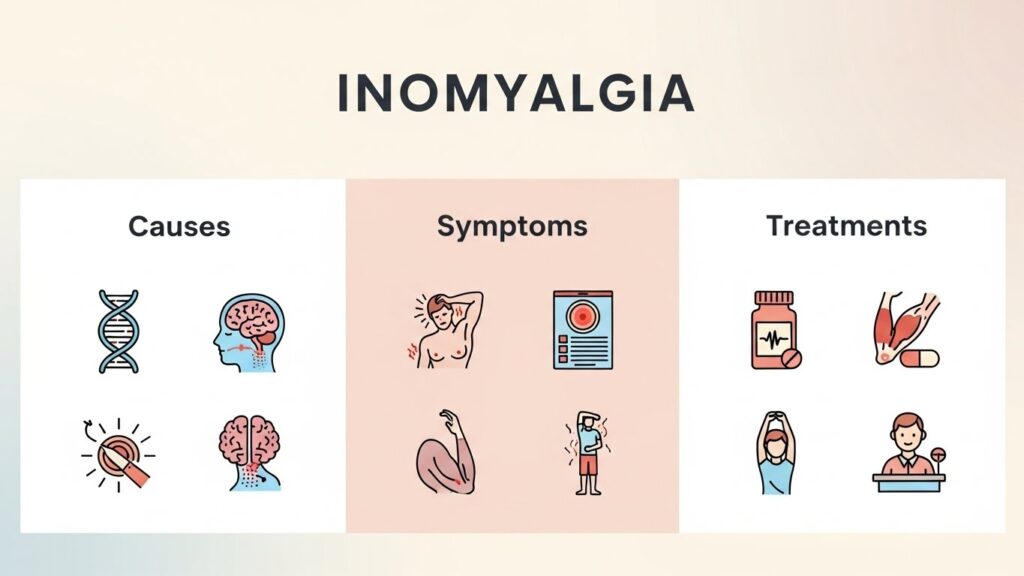
Common Causes of Inomyalgia
Inomyalgia rarely has a single cause. Instead, it usually emerges from a combination of physical, psychological, and lifestyle factors.
One of the most common contributors is muscle overuse without adequate recovery. This does not necessarily mean intense physical activity; even prolonged sitting can overload certain muscle groups, particularly in the neck, shoulders, lower back, and hips.
Stress also plays a significant role. Chronic stress triggers muscle tension as part of the body’s natural response. When stress becomes constant, muscles remain partially contracted, reducing blood flow and increasing pain sensitivity.
Other contributing factors include poor posture, inadequate sleep, dehydration, nutritional deficiencies, and lack of regular movement. In some cases, underlying medical conditions or inflammatory processes may also be involved.
Symptoms Associated With Inomyalgia
The symptoms of inomyalgia can vary from person to person, but they share certain defining characteristics. The pain is typically localized within specific muscles and may feel deep, aching, or burning rather than sharp.
Many individuals report stiffness, especially after periods of inactivity. Muscles may feel tender to the touch, and certain movements can exacerbate discomfort. Unlike acute injuries, inomyalgia pain often fluctuates rather than following a clear pattern of improvement.
Fatigue is another common symptom. When muscles are constantly tense or painful, the body expends more energy simply maintaining posture and movement. Over time, this contributes to overall tiredness and reduced endurance.
In high-performing professionals, these symptoms can quietly erode productivity, concentration, and resilience.
Inomyalgia vs Other Muscle Pain Conditions
To understand inomyalgia more clearly, it helps to compare it with other common sources of muscle pain.
| Condition | Primary Source of Pain | Typical Duration | Common Triggers |
|---|---|---|---|
| Inomyalgia | Muscle tissue itself | Persistent or recurrent | Stress, posture, overuse |
| Delayed-onset muscle soreness | Muscle micro-tears | Short-term | Exercise |
| Myofascial pain | Muscle and fascia | Chronic | Trigger points |
| Neuropathic pain | Nerve-related | Variable | Nerve compression |
This comparison highlights why inomyalgia can be difficult to identify. It lacks the clear cause-and-effect relationship seen in exercise-related soreness and may overlap with other chronic pain conditions.
How Inomyalgia Is Diagnosed
There is no single test that definitively diagnoses inomyalgia. Instead, diagnosis is typically based on clinical evaluation, patient history, and exclusion of other conditions.
Healthcare professionals focus on the pattern of pain, its duration, and associated factors such as stress levels, work habits, and physical activity. Imaging or lab tests may be used to rule out structural or inflammatory issues, but they often appear normal in cases of inomyalgia.
This can be frustrating for patients, particularly those accustomed to data-driven clarity. However, understanding that inomyalgia is a functional muscle condition rather than a structural defect is key to effective management.
Treatment Approaches for Inomyalgia
Treating inomyalgia requires a multi-dimensional approach. Because the condition is influenced by both physical and lifestyle factors, successful treatment often involves small but consistent changes rather than a single intervention.
Physical therapy plays a central role. Targeted exercises help restore normal muscle function, improve circulation, and correct movement patterns. Manual therapies, such as massage or myofascial release, can also reduce muscle tension and improve flexibility.
Stress management is equally important. Techniques such as mindfulness, controlled breathing, or cognitive behavioral strategies can reduce the physiological tension that contributes to muscle pain.
In some cases, medications may be used to manage pain or inflammation, but they are generally considered supportive rather than primary treatments. Long-term improvement usually depends on addressing root causes rather than masking symptoms.
Lifestyle Adjustments That Make a Difference
For professionals with demanding schedules, lifestyle changes must be realistic to be effective. Fortunately, even modest adjustments can significantly reduce inomyalgia symptoms.
Improving ergonomics is a strong starting point. Proper chair support, screen height, and keyboard positioning reduce unnecessary muscle strain. Regular movement breaks—short walks, stretching, or posture resets—help prevent muscles from locking into tense positions.
Sleep quality also matters. Muscles repair and recover during rest, and inadequate sleep can amplify pain perception. Hydration and balanced nutrition support muscle metabolism and reduce fatigue.
For founders and entrepreneurs, viewing these adjustments as performance investments rather than distractions can shift priorities in a healthier direction.
Inomyalgia and Mental Performance
The relationship between muscle pain and cognitive function is often overlooked. Persistent discomfort competes for attention, increases irritability, and reduces tolerance for stress. Over time, this can impair decision-making and creativity.
In high-stakes environments where clarity and focus are essential, managing inomyalgia becomes part of maintaining professional effectiveness. Addressing physical well-being supports mental resilience, a critical asset in leadership roles.
This connection underscores why inomyalgia is not just a medical issue, but a strategic one for modern professionals.
When to Seek Professional Help
While mild muscle discomfort is common, persistent pain should not be ignored. If muscle pain lasts for weeks, interferes with daily activities, or worsens despite self-care efforts, professional evaluation is advisable.
Early intervention can prevent inomyalgia from becoming chronic. It also reduces the risk of compensatory movement patterns that can lead to additional problems in joints or other muscle groups.
Seeking help is not a sign of weakness, but of informed self-management—an approach familiar to anyone building or leading a business.
The Long-Term Outlook for Inomyalgia
The prognosis for inomyalgia is generally positive when addressed thoughtfully. Most individuals experience significant improvement with a combination of physical therapy, stress reduction, and lifestyle adjustments.
The key challenge lies in consistency. Because symptoms often improve gradually, it can be tempting to abandon strategies once pain decreases. Long-term success depends on integrating healthy habits into daily routines.
For professionals accustomed to long-term planning and iteration, this mindset should feel familiar.
Conclusion
Inomyalgia is a modern condition shaped by modern lifestyles. It reflects how prolonged stress, sedentary work, and constant mental engagement affect the body in subtle but meaningful ways. For startup founders, entrepreneurs, and tech professionals, understanding inomyalgia is not about medical terminology—it is about sustainability.