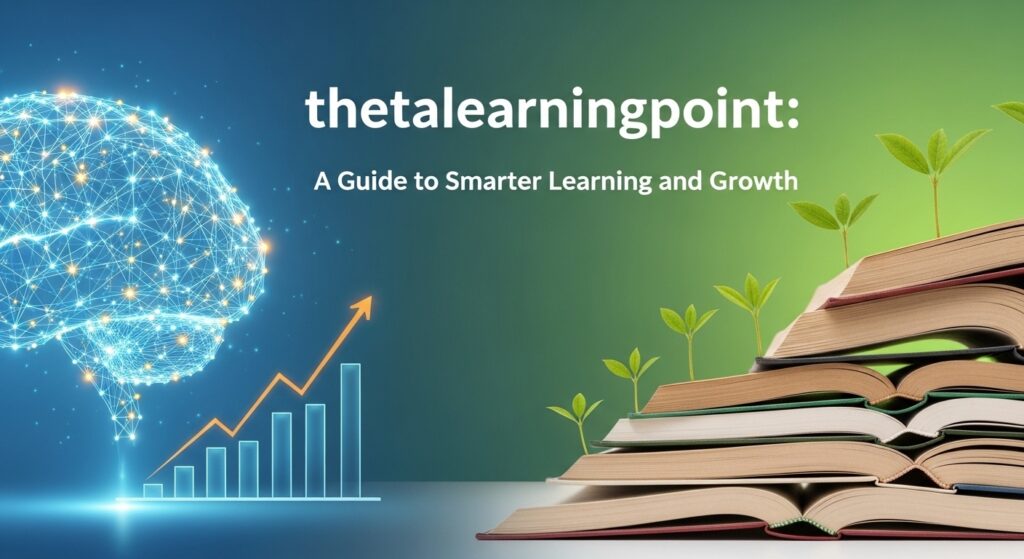
In the era of accelerated digital transformation, continuous learning has become the cornerstone of personal and professional success. But traditional learning models often fail to keep up with the speed of change. That’s where Thetalearningpoint steps in — an emerging concept that combines neuroscience, technology, and self-development strategies to create a smarter, more adaptive approach to learning and growth.
Whether you’re a student, professional, or lifelong learner, Thetalearningpoint offers a framework that transforms how you absorb knowledge, think creatively, and apply what you learn in real-world scenarios.
What Is Thetalearningpoint?
At its core, Thetalearningpoint represents a state of optimized learning, inspired by the theta brainwave — the frequency band (4–8 Hz) associated with deep relaxation, creativity, and subconscious processing. In this state, the brain becomes more receptive to information, more imaginative, and more capable of forming lasting connections.
The concept integrates this neurological foundation with modern educational psychology and digital tools, forming a structured yet flexible system designed to help learners:
- Retain information more effectively
- Think more creatively and strategically
- Build habits of lifelong curiosity and self-improvement
In essence, Thetalearningpoint isn’t just a platform or theory — it’s a philosophy of learning smarter, not harder.
The Science Behind “Theta” Learning
To understand Thetalearningpoint, we need to explore the science behind it. Brainwaves are electrical patterns that reflect how the brain operates in different states:
- Beta (13–30 Hz): Active, analytical thinking
- Alpha (8–13 Hz): Relaxed alertness
- Theta (4–8 Hz): Deep relaxation and creativity
- Delta (0.5–4 Hz): Deep sleep and unconsciousness
When in a theta state, the brain bridges the conscious and subconscious, enabling accelerated learning, insight generation, and emotional processing. Children naturally spend more time in this state, which is why they learn languages and patterns so effortlessly.
Thetalearningpoint leverages this principle through guided techniques that help adults re-engage that state for more effective learning.
The Philosophy of Thetalearningpoint
The philosophy behind Thetalearningpoint can be summarized in three interconnected pillars:
- Awareness: Understanding how your mind learns best and identifying your cognitive strengths.
- Adaptation: Using data-driven tools and strategies to align your learning style with your goals.
- Application: Translating new knowledge into action — because true learning is demonstrated through doing.
This holistic approach ensures that learning isn’t just theoretical but deeply personal and purpose-driven.
Key Features of Thetalearningpoint
1. Adaptive Learning Frameworks
Thetalearningpoint integrates AI-driven analytics to tailor lessons, reading lists, and exercises to an individual’s pace, comprehension, and interests. It promotes personalized growth paths instead of one-size-fits-all education models.
2. Neuro-Learning Techniques
Techniques such as visualization, spaced repetition, meditation, and associative mapping are core components of the Thetalearningpoint method. These methods activate neural pathways linked to long-term memory and creativity.
3. Digital Mindfulness Tools
Learning in the digital age often leads to burnout. Thetalearningpoint incorporates mindfulness tools—like guided breathing, focus timers, and biofeedback integration—to help users achieve an optimal learning state.
4. Real-World Application Modules
Beyond theory, Thetalearningpoint encourages learners to immediately apply knowledge through project-based learning and reflection exercises. Each learning cycle includes feedback loops for continuous improvement.
5. Community & Collaboration
The platform emphasizes peer-to-peer learning and mentorship. Collaboration with like-minded individuals fosters accountability, creativity, and diverse perspectives.
How Thetalearningpoint Enhances Smarter Learning
1. Cognitive Efficiency
By optimizing the learner’s mental state, Thetalearningpoint allows the brain to absorb, organize, and recall information faster.
2. Emotional Integration
Unlike traditional models that focus solely on logic, this method acknowledges the role of emotion in retention. It helps learners connect emotionally with content, enhancing motivation and empathy.
3. Habit Formation
Using behavioral science principles, Thetalearningpoint guides users in building consistent learning habits, ensuring that growth becomes second nature.
4. Focus & Flow
The structured integration of mindfulness and neuroscience helps learners achieve flow states — the deep focus zone where productivity and creativity peak.
Applications Across Fields
The versatility of Thetalearningpoint makes it relevant across multiple domains:
| Field | Application Example |
|---|---|
| Education | Enhancing student engagement through neuro-adaptive study techniques |
| Corporate Training | Boosting employee learning retention and leadership development |
| Creative Industries | Unlocking artistic flow, ideation, and design thinking |
| Personal Growth | Improving self-awareness, emotional intelligence, and confidence |
| Health & Wellness | Supporting mental clarity, stress management, and cognitive recovery |
The Technology Behind Thetalearningpoint
Modern versions of Thetalearningpoint often integrate AI, machine learning, and neurofeedback. These technologies analyze user interaction data to:
- Track learning rhythms
- Measure cognitive load and attention span
- Suggest rest intervals or brain-training exercises
- Deliver adaptive content dynamically
By combining neuroscience with technology, Thetalearningpoint evolves with each learner — creating a living, intelligent learning ecosystem.
Steps to Practice Thetalearningpoint in Daily Life
You don’t need advanced tools to start benefiting from this approach. Here’s how to activate your own “Thetalearningpoint”:
- Start with a Calm Mind: Engage in 5–10 minutes of mindful breathing before studying.
- Use Visualization: Imagine the concepts vividly — associate them with imagery or experiences.
- Focus in Cycles: Study in 25–45 minute blocks, followed by short reflection breaks.
- Engage Emotionally: Connect learning to personal meaning or real-world relevance.
- Sleep & Reflect: Allow the subconscious mind to process information overnight.
- Review in Theta-Friendly Times: Early mornings or before sleep are ideal for light review or creative thinking.
These techniques activate theta states naturally, promoting deeper understanding and retention.
Why Thetalearningpoint Matters in the Digital Age
In today’s information-saturated environment, knowledge is abundant, but understanding is scarce. Thetalearningpoint offers a solution by emphasizing quality over quantity, helping learners master the skill of learning itself.
It empowers individuals to:
- Think critically amid complexity
- Adapt rapidly to technological changes
- Retain focus in a distraction-driven world
- Bridge analytical and creative intelligence
As automation reshapes the job market, the most valuable skill of all is learning how to learn — and that’s precisely what Thetalearningpoint cultivates.
The Future of Thetalearningpoint
As AI and neuroscience continue to advance, Thetalearningpoint is expected to evolve into a multi-modal learning environment — integrating virtual reality classrooms, biometric feedback, and cognitive mapping to personalize education at an unprecedented scale.
Potential future directions include:
- AI tutors that respond to emotional and cognitive cues
- Immersive VR simulations for hands-on experiential learning
- Brain-computer interface (BCI) integration to optimize concentration and recall
- Global learning networks connecting diverse learners in real time
This evolution marks a shift from traditional content consumption to conscious, adaptive learning ecosystems.
Conclusion
Thetalearningpoint represents the convergence of neuroscience, technology, and mindfulness — a modern guide to smarter learning and personal growth. It challenges outdated educational paradigms by showing that effective learning isn’t about memorization or speed; it’s about state of mind, awareness, and purposeful application.